
Let’s be honest about something uncomfortable.
A lot of marketing agencies are very good at marketing themselves. The website looks sharp, the case studies are polished, the sales call goes smoothly, and before you know it you’ve signed a six-month contract based on a promise and a PDF.
Then the work starts. And slowly, things start to feel a little off.
Reports arrive but they’re full of numbers that don’t quite connect to your business reality. Questions get answered with more questions, or with jargon that leaves you more confused than before. You ask where your budget actually went last month and you get a vague summary that mentions “brand awareness” and “reach” without a single hard number attached.
Sound familiar? You’re not alone.
This is what happens when you choose a marketing partner based on confidence rather than transparency — and it’s one of the most expensive mistakes a business can make.
The Problem With Impressive Pitches
There is no shortage of agencies that can walk into a room and make you feel like they have all the answers. The decks are slick. The team looks senior. They name-drop a few big clients. They throw around words like “data-driven” and “full-funnel” and “performance-first.”
But here’s the thing — any agency can say those words. What separates a genuinely good partner from a smooth-talking one is what happens after you sign on the dotted line.
The question you should be asking in that first meeting is not “what results can you get me?” The better question is: how will you show me what you’re doing, and what happens when something isn’t working?
That one question will tell you more about an agency than any case study will.
What Transparency Actually Looks Like
People talk about transparency like it’s a personality trait — like some agencies just happen to be more honest than others. But it’s not a vibe. It’s a set of behaviours you can look for before you commit.
Clear pricing with no hidden costs. A transparent agency tells you upfront what you’re paying for — management fees, platform fees, ad spend, creative costs. There should be no surprises on your invoice. If an agency is vague about how they structure their fees during the sales process, that vagueness doesn’t disappear once you become a client. It gets worse.
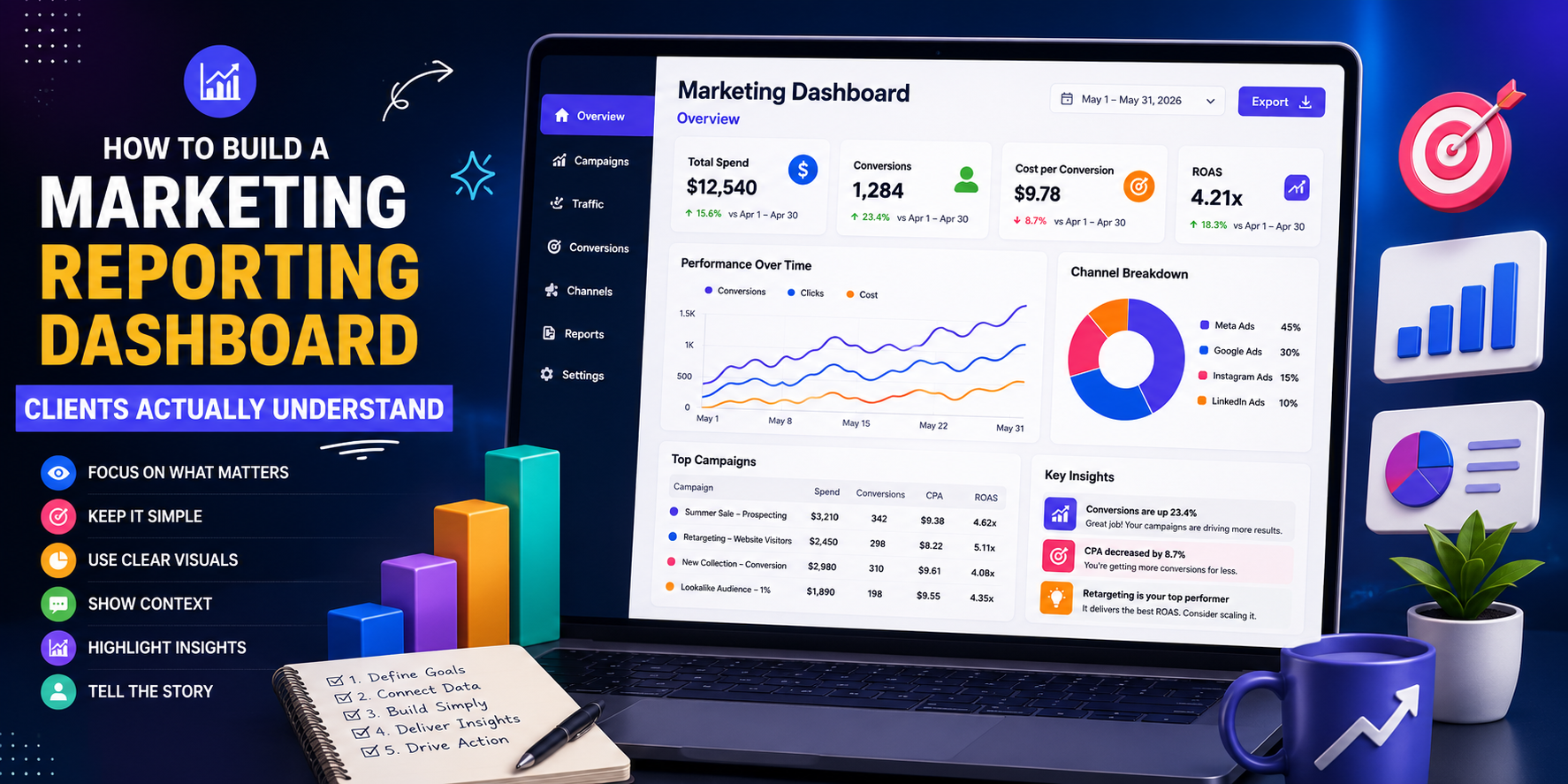
Reporting that connects to your actual business goals. Good reports don’t just show you what happened — they explain what it means for your revenue. If you’re an ecommerce brand, you should be seeing ROAS, cost per purchase, and revenue generated — not just impressions and click-through rates. Impressions don’t pay your rent.
Honest conversations about what isn’t working. This is the big one. Every campaign hits rough patches. Seasons change. Audiences shift. A platform updates its algorithm. A transparent agency tells you when performance dips, explains why they think it happened, and tells you what they’re doing about it — before you have to chase them for answers. An agency that only calls you with good news is an agency managing your perception, not your results.
Access to your own accounts. This seems basic, but you’d be surprised how often it doesn’t happen. Your Google Ads account, your Meta Business Manager, your analytics — all of it should be owned by you, not the agency. If an agency runs your campaigns from their own account and you have no direct access, you have no leverage and no visibility. That is not a partnership. That is a black box.
The Real Cost of an Opaque Agency
Choosing an agency that isn’t transparent doesn’t just cost you money — it costs you time, and time in business is always the more painful loss.
Think about it. You spend three to six months with an agency that isn’t being straight with you. You’re not seeing real results, but you’re also not sure if the results are actually bad or if you’re just not reading the reports correctly. So you give it another month. And another. And by the time you’ve decided enough is enough, you’ve burned through a significant budget and you’re right back at square one — except now you’re behind schedule and more cynical about the whole thing.
The businesses that grow fastest are the ones that make decisions quickly. And to make decisions quickly, you need clear, honest information. An agency that withholds that information — whether intentionally or just through poor communication habits — slows you down even when the campaigns themselves are performing.
Red Flags to Watch for in the Sales Process
You don’t have to wait until you’re already working with an agency to spot a lack of transparency. These signs usually show up before you even sign a contract.
They can’t explain their strategy in plain language. If an agency responds to “how does this work?” with fifteen minutes of jargon and you still don’t understand what they’re actually going to do with your money — that’s a problem. Good strategy isn’t complicated to explain. If they can’t simplify it for you, either they don’t fully understand it themselves, or they don’t want you to.
Their case studies are vague. “We helped a brand grow by 300%” is not a case study. What brand? What was the starting point? What was the time frame? What specifically did you do? Real results come with real context. If an agency’s social proof doesn’t have specifics, assume there’s a reason for that.
They’re reluctant to give you account access. Ask early. Ask directly. If there’s any hesitation, take note.
They guarantee results before they understand your business. A good agency asks a lot of questions before they promise anything. They want to understand your margins, your customer lifetime value, your conversion rate, your seasonal patterns. If someone promises you a specific ROAS or a specific number of leads in your first conversation — before they’ve looked under the hood — they’re telling you what you want to hear, not what’s true.
They pressure you into long contracts upfront. Confidence is month-to-month. A truly good agency doesn’t need to lock you in for twelve months to feel secure. They keep clients because they deliver results and communicate honestly. If an agency is pushing hard for a long-term commitment before they’ve proven anything, ask yourself why.
Why This Matters More Now Than It Did Five Years Ago
Marketing has gotten significantly more complex. There are more channels, more tools, more data points, and more ways for an agency to hide poor performance behind an overwhelming volume of information.
At the same time, budgets are tighter. Businesses are under more pressure to show ROI on every pound and dollar they spend. There is less room for waste, and there is less patience for vague answers.
In that environment, transparency isn’t just a nice-to-have quality in an agency. It’s a competitive advantage for your business. When you know exactly what’s working and what isn’t, you can move faster, cut what’s failing, and double down on what’s producing real results.
The businesses that will win over the next few years are the ones that build marketing partnerships based on honest information — not on good vibes and impressive slide decks.
What to Ask Before You Sign
Here are five questions worth asking any agency before you commit:
- Can I see a real client report you’ve sent recently? Not a template — an actual report sent to an actual client. This tells you immediately what level of detail and honesty you can expect.
- Who will actually be working on my account? Find out if the person selling you the service is the person who’ll be managing your campaigns. Ask to meet the actual team member before signing.
- What happens when a campaign underperforms? How do they communicate it? What’s their process for diagnosing and fixing problems? How quickly do they act?
- Will I have full admin access to all accounts and platforms? Non-negotiable. The answer should be yes without any hesitation.
- How do you define success for a business like mine? If their answer doesn’t connect to your revenue or profit — if it’s purely about traffic or engagement or reach — that tells you something important about what they’re optimising for.
The Bottom Line
Choosing a marketing partner is one of the most consequential decisions you’ll make for your business. Done well, it accelerates everything. Done badly, it drains budget, time, and energy you can’t get back.
The best agencies aren’t the ones with the most awards or the most polished websites. They’re the ones who tell you the truth — about what they can do, about what they can’t, about what’s working, and about what needs to change.
Transparency won’t make a bad strategy good. But it gives you the information you need to make better decisions, faster. And in business, that is almost always the thing that makes the difference.
About The Brand Hawk
The Brand Hawk is a performance marketing agency working with ecommerce and D2C brands. We believe in showing our clients exactly what we’re doing and why — no jargon, no vanity metrics, no black boxes. If you want to see what that looks like in practice, get in touch for a free audit.