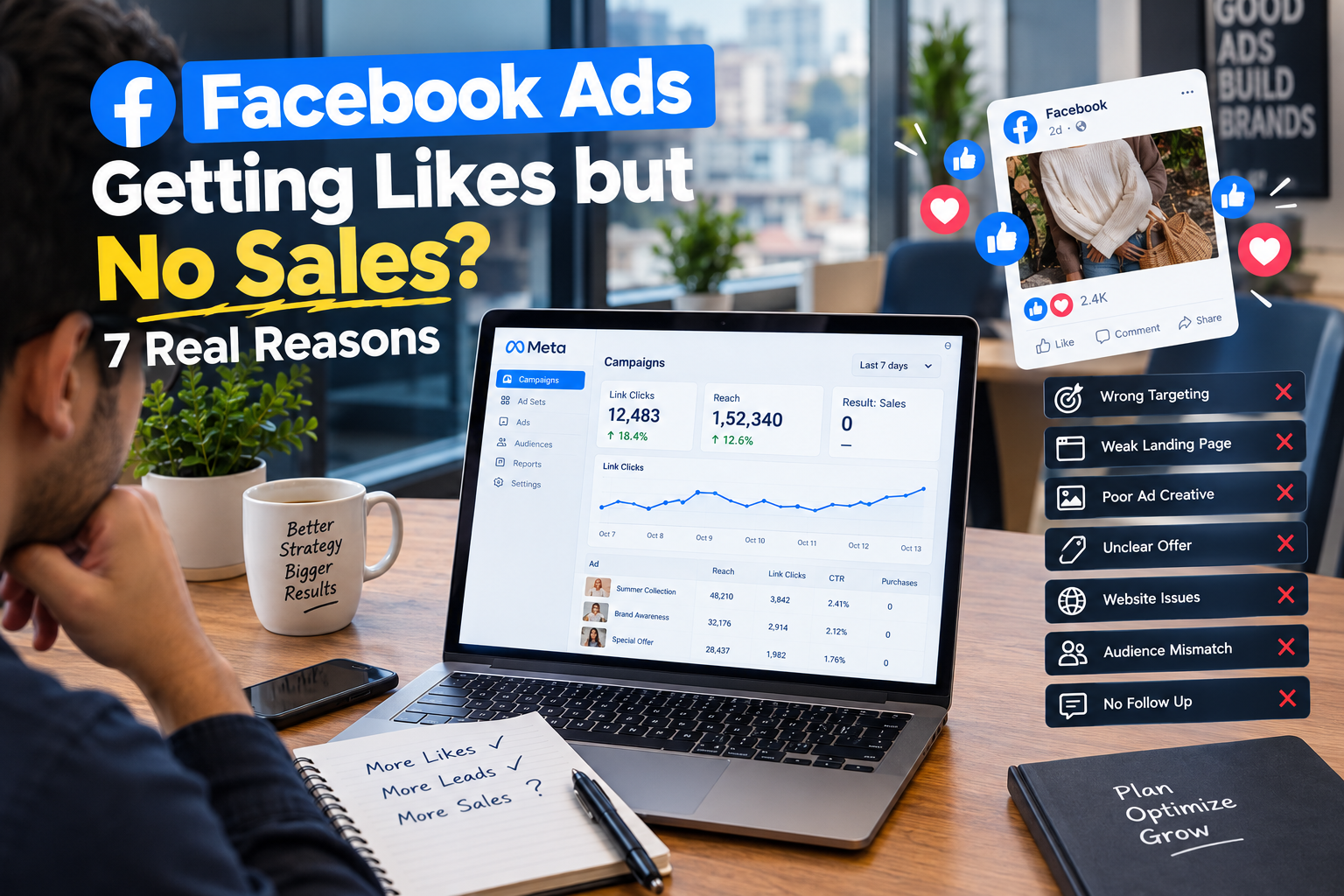
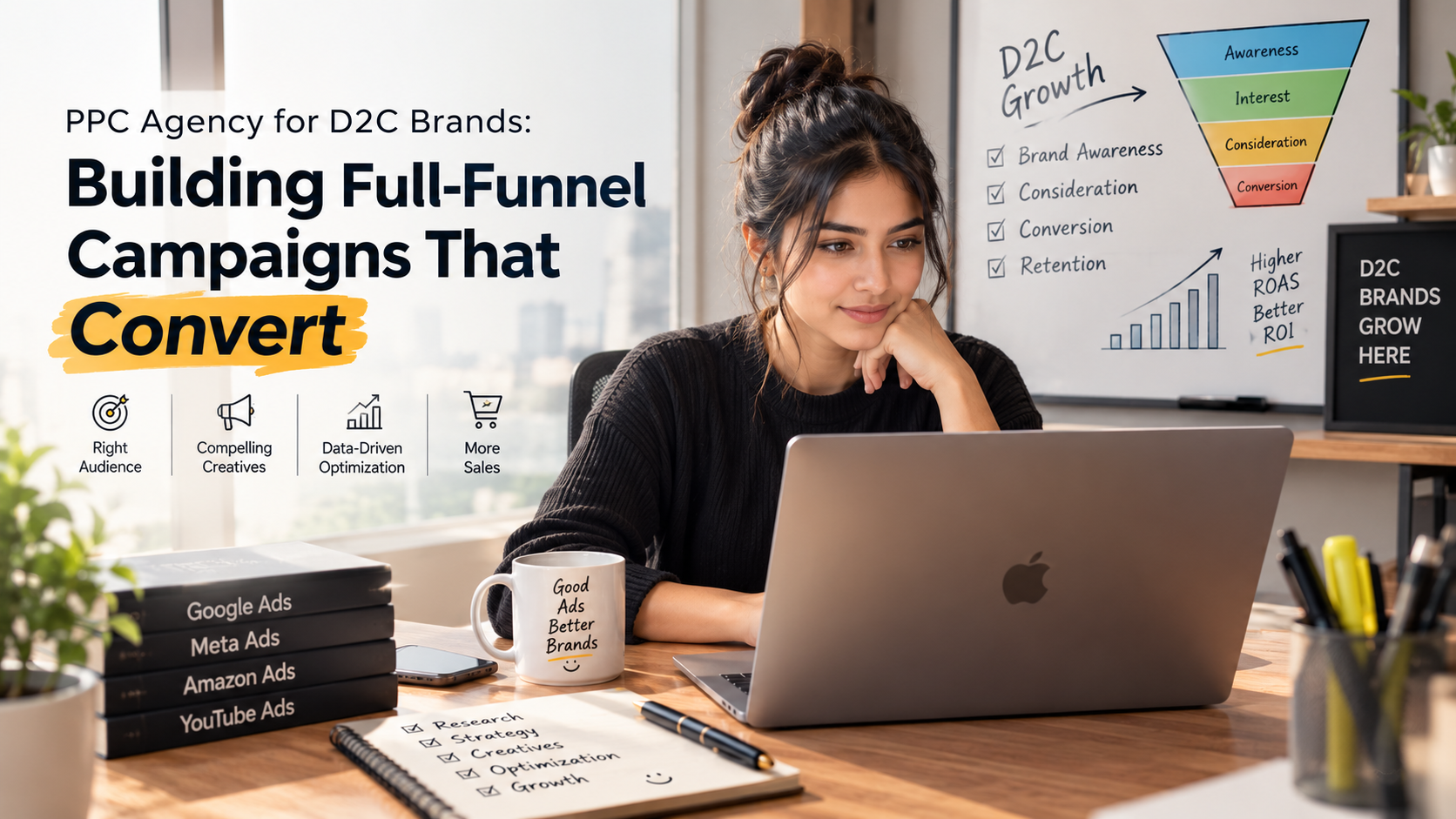
A lot of D2C brands run PPC the same way: launch a conversion campaign, target people who look like existing buyers, and hope enough of them are ready to purchase right now. That works, until it doesn’t. The brands that scale past a certain point are usually the ones whose PPC agency is thinking about the whole customer journey, not just the last click before checkout.
This guide breaks down what a full-funnel PPC strategy actually looks like for D2C brands, why bottom-funnel-only campaigns eventually plateau, and how the pieces fit together across Google and Meta.
Why Bottom-Funnel-Only PPC Eventually Plateaus
Most D2C brands start PPC with conversion-focused campaigns, and that’s usually the right call early on — there’s no data yet, so targeting people closest to buying makes sense. The problem shows up later: that audience of ready-to-buy people is finite. Once an account has captured most of it, adding more budget to the same bottom-funnel campaigns just means paying more for the same pool of buyers, and ROAS starts sliding as a result.
A full-funnel approach exists to solve exactly this — building demand further up, so there’s a steady stream of new people entering the funnel instead of an account competing for an ever-shrinking pool of warm buyers.
What Full-Funnel Actually Means for D2C PPC
Top of funnel: creating demand, not capturing it
This stage is about reaching people who don’t know your brand yet but match your best customer profile. On Meta Ads, that means broad prospecting campaigns with strong creative doing the heavy lifting. On Google, it can mean YouTube placements or Performance Max campaigns pulling in new audiences rather than just Search capturing existing intent. The goal here isn’t an immediate sale — it’s getting the brand onto someone’s radar.
Middle of funnel: building consideration
This is the stage most D2C brands skip entirely, and it’s usually where the biggest missed opportunity sits. People who’ve engaged with a Reel, visited the site, or viewed a product but didn’t buy need a different message than a cold audience — social proof, comparison content, or addressing a specific hesitation (fit, quality, shipping time) rather than another generic shop-now ad.
Bottom of funnel: converting intent
This is where most PPC budgets already live, and for good reason — retargeting warm visitors, cart abandoners, and past purchasers reliably converts. Google Ads Search campaigns targeting branded and high-intent keywords also belong here, alongside Meta retargeting and dynamic product ads.
Post-purchase: feeding the funnel back into itself
A full-funnel strategy doesn’t stop at the sale. Retention-focused campaigns — cross-sell, replenishment reminders, loyalty offers — turn existing customers into repeat revenue, which is almost always cheaper to generate than a new customer acquisition.
How the Channel Mix Fits Together
- Meta Ads for top and middle funnel — strong for reaching new audiences through creative and building consideration through engagement-based retargeting.
- Google Search for bottom funnel — capturing people actively searching for the product or the brand by name, where intent is already high.
- Google Shopping and Performance Max — useful across the funnel for ecommerce specifically, since they combine prospecting and conversion signals in one campaign type.
- TikTok Adsfor top funnel — particularly effective for reaching younger or trend-driven audiences before they’ve shown any purchase intent elsewhere.
- JioHotstar/OTTfor broad awareness — large-scale reach in India, useful for brands trying to build category awareness beyond what social platforms alone can deliver.
Common Full-Funnel Mistakes D2C Brands Make
- Skipping the middle entirely — jumping straight from cold prospecting to a hard sales pitch, missing the audience that needs one more nudge.
- Using the same creative at every stage — a cold audience and a warm retargeting audience need different messaging, not the same ad with a different budget.
- No tracking connecting the stages — without clear attribution, it’s hard to tell whether top-funnel spend is actually feeding bottom-funnel conversions later.
- Cutting top-funnel budget too early — when cash is tight, prospecting is often the first thing cut, which quietly shrinks the pipeline a few months down the line.
- Ignoring the post-purchase stage — treating the sale as the end of the funnel instead of the start of a repeat-purchase relationship.
What a PPC Agency Actually Does to Build This
In practice, running a full-funnel strategy well comes down to a few consistent habits:
- Mapping campaigns explicitly to funnel stages instead of running everything as one undifferentiated pool.
- Producing distinct creative and messaging for cold, warm, and hot audiences.
- Setting up tracking that shows how top-funnel spend influences bottom-funnel conversions over time.
- Balancing budget across stages deliberately, rather than defaulting all spend to bottom-funnel campaigns because they show the clearest immediate ROAS.
- Reviewing funnel health regularly — checking whether the top is bringing in enough new people to keep the bottom fed.
How The Brand Hawk Builds Full-Funnel PPC for D2C Brands
At The Brand Hawk, full-funnel PPC means structuring Meta Ads and Google Ads around distinct funnel stages from the start, rather than defaulting to conversion campaigns alone. Top-funnel prospecting is backed by a steady AI video creative pipeline, middle-funnel consideration is supported by ongoing social media marketing, and channels like TikTok Ads and JioHotstar Ads get brought in when a brand needs more top-of-funnel reach than Meta and Google alone can deliver. When conversion rates lag despite strong traffic, our website development team looks at whether the site itself is the actual bottleneck.
More on our approach is on the About Us page, and the full service list is at thebrandhawk.com.
Frequently Asked Questions
How should a D2C brand split PPC budget across funnel stages?
There’s no universal ratio, but a common starting point is weighting more heavily toward bottom-funnel early on, then gradually shifting more budget toward top and middle funnel as the brand grows and the easy bottom-funnel audience gets saturated.
Is full-funnel PPC worth it for a smaller D2C brand with a limited budget?
Even small brands benefit from at least a light middle-funnel layer — simple retargeting sequences that address common hesitations cost relatively little and often recover sales that would otherwise be lost.
How long does it take to see results from a full-funnel PPC strategy?
Bottom-funnel results are usually visible quickly, within a few weeks. Top-funnel investment takes longer to show its full impact, often 60-90 days, since it’s building a pipeline rather than an immediate conversion.
What’s the difference between a PPC agency and a Meta Ads agency for D2C brands?
A Meta Ads agency typically focuses on one platform, while a PPC agency usually manages paid campaigns across multiple channels — Google, Meta, and others — and coordinates strategy between them rather than optimising each in isolation.