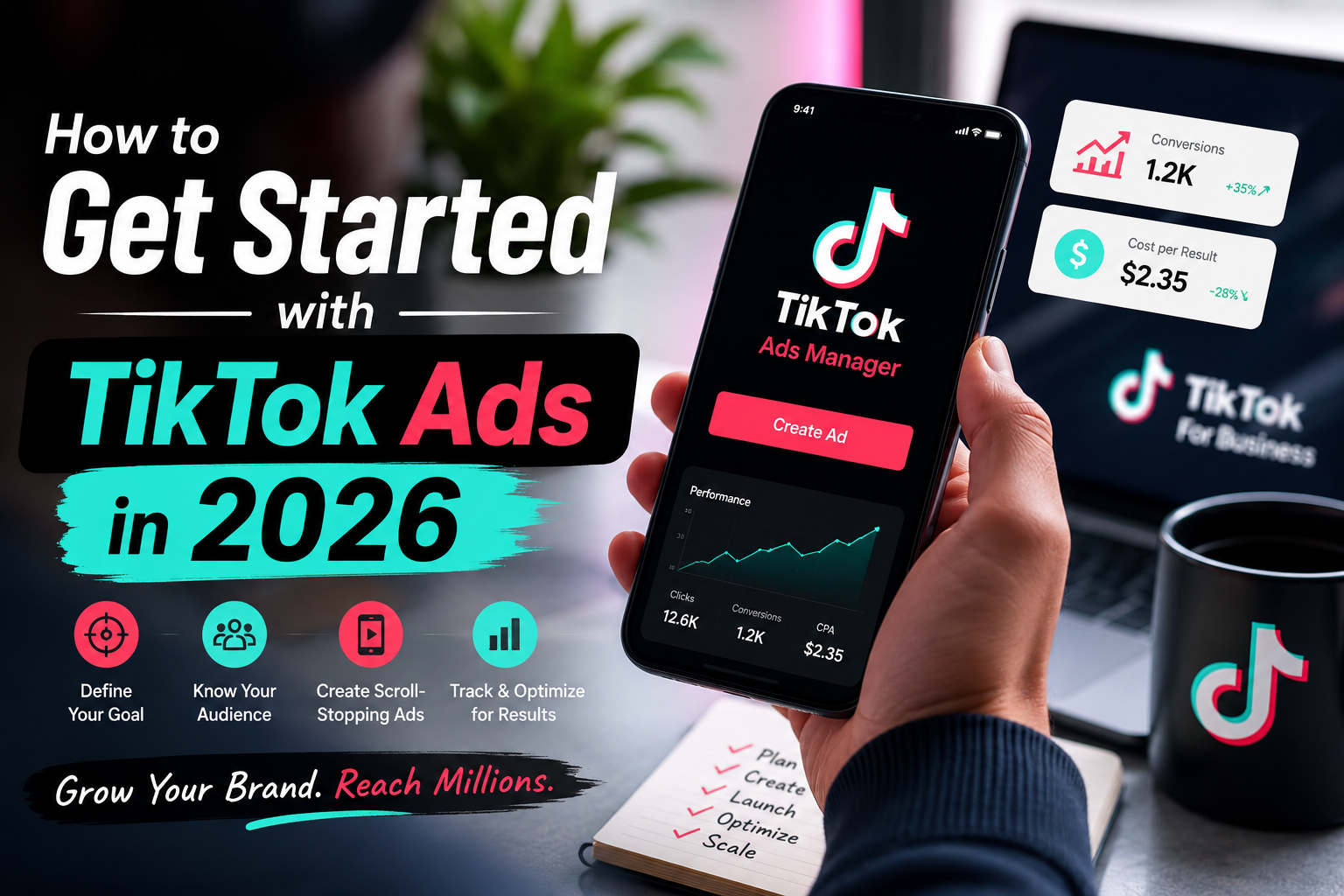
A few years ago, if you’d told a room full of performance marketers that TikTok would become a serious revenue channel for ecommerce brands, most of them would have smiled politely and changed the subject.
That conversation looks very different now.
TikTok has grown from a platform people used to watch teenagers dance into one of the most powerful paid advertising tools available for consumer brands. The combination of highly engaging short-form video, a recommendation algorithm that surfaces content to the right people at scale, and an audience that actually buys things after seeing them on the platform has made TikTok Ads one of the most interesting channels to be running in 2026.
But interesting doesn’t automatically mean easy. TikTok Ads have their own logic, their own creative requirements, and their own quirks. If you go in treating it like a Facebook Ads account with a different logo, you will waste money and wonder why it didn’t work.
This guide is for brands and marketers who want to start running TikTok Ads properly — from account setup through to your first campaign, without making the mistakes that most people make in the first few months.
First, Is TikTok Actually Right for Your Brand?
Not every product is a natural fit for TikTok, and it’s worth being honest about this before you commit time and budget.
TikTok works exceptionally well for products that are visual, demonstrable, and have a clear “before and after” story. Beauty, skincare, fashion, food, fitness, home products, gadgets, and anything that people genuinely enjoy seeing in action — these categories thrive on TikTok because the content format naturally suits them. You’re not just showing an ad. You’re showing the product being used, experienced, or reacted to.
It’s harder (though not impossible) for products that are abstract, complex, or primarily B2B. Not because the audience isn’t there, but because the content format requires a more creative translation of what you’re selling.
If your product can be shown working in fifteen to thirty seconds in a way that makes someone think “I need that” — you’re in the right place.
Setting Up Your TikTok Ads Manager Account
Before you run a single ad, you need a TikTok for Business account and access to TikTok Ads Manager. Here’s how the setup works:
Step 1 — Create a TikTok for Business account. Go to ads.tiktok.com and sign up. You’ll need a business email, basic company details, your website URL, and your billing information. The setup takes about ten minutes.
Step 2 — Install the TikTok Pixel. This is non-negotiable. The TikTok Pixel tracks what happens after someone clicks your ad — purchases, add-to-carts, page views. Without it, you’re flying blind. Install it via your website platform (Shopify has a direct TikTok integration), through Google Tag Manager, or manually in your site’s header code. Verify it’s firing correctly using the TikTok Pixel Helper Chrome extension before you spend a single penny.
Step 3 — Connect your TikTok Business account. If you have a TikTok organic account for your brand, connect it to your Ads Manager. This unlocks Spark Ads — one of the most effective ad formats on the platform, which we’ll get to shortly.
Step 4 — Set up your product catalogue (for ecommerce). If you’re running a Shopify or WooCommerce store, you can connect your product catalogue to TikTok Ads Manager directly. This enables Dynamic Showcase Ads, which automatically show relevant products to users based on their browsing behaviour.
Understanding TikTok’s Campaign Structure
TikTok Ads Manager uses the same three-level structure as Meta: Campaign → Ad Group → Ad. Understanding what each level controls saves a lot of confusion when you’re setting things up.
Campaign Level
This is where you choose your objective. The main options for ecommerce brands are: Product Sales (formerly Conversions), Traffic, and Reach. For most brands starting out, Product Sales is the right choice — it tells TikTok’s algorithm to optimise for purchases, not just clicks.
Ad Group Level
This is where targeting, placements, budget, and schedule live. TikTok’s targeting options include demographics, interests, behaviours, and custom audiences (built from your pixel data or customer lists). When you’re starting out, don’t over-narrow your targeting. TikTok’s algorithm is genuinely good at finding buyers when you give it room to work — a broad or semi-broad audience often outperforms a highly restricted one.
Ad Level
This is where your video, copy, and call-to-action live. You can run multiple ads within one ad group to test different creatives — and on TikTok, creative testing is probably the most important optimisation lever you have.
TikTok Ad Formats You Actually Need to Know
TikTok has several ad formats. These are the ones worth understanding when you’re starting out:
In-Feed Ads. These appear in users’ For You feeds as they scroll — they look and feel like organic TikTok content. They can be up to 60 seconds long, though shorter (15–30 seconds) tends to perform better. This is the most common format and the right starting point for most brands.
Spark Ads. This format lets you boost existing organic TikTok posts — either from your own account or from creators who have given you permission. The reason Spark Ads often outperform standard In-Feed Ads is that they look completely native. They have real like counts, comment sections, and profile links. They don’t feel like ads because they started as content. If you have organic posts performing well, Spark them.
Top View Ads. Full-screen video that plays when someone opens the app. High-impact, high-cost. Not relevant for most brands starting out, but worth knowing about for future brand campaigns.
Dynamic Showcase Ads. Automatically generated ads that show products from your catalogue to users likely to be interested. Useful for ecommerce brands with large product ranges once your pixel has enough data.
The Creative Reality: TikTok Ads Live or Die on Video
This is the part people underestimate most. On Meta, a decent static image with solid targeting can generate reasonable results. On TikTok, creative is everything. Your targeting, your bid strategy, your audience selection — all of it becomes secondary if the video doesn’t work.
What works on TikTok looks nothing like what works on other platforms. The polished, corporate-feeling ads that brands spend weeks producing often get ignored. What performs is content that feels made for the platform — quick, direct, visually engaging from the first frame, and honest.
A few things that consistently work:
- Hook in the first two seconds. TikTok users scroll fast. If your video doesn’t grab attention immediately — with a surprising statement, a visual that makes people pause, or a question they care about — they’re already gone. Don’t save the interesting part for later.
- Show the product in use, not just the product. People respond to seeing something work. A skincare brand showing a before-and-after result outperforms one showing the bottle on a nice background. A kitchen gadget being used outperforms a product shot with good lighting.
- Authentic over polished. This doesn’t mean low-quality — it means not feeling like an ad. Some of the best-performing TikTok ads look like they were shot on a phone by someone who genuinely uses the product and wanted to share it.
- User-generated content (UGC). Getting real customers or creators to make videos about your product is one of the highest-ROI investments you can make on TikTok. UGC converts well because it’s trusted, and it scales — you can test multiple creators’ videos across your ad groups simultaneously.
- Test aggressively. No one can predict which creative will win before the algorithm has seen it. Run three to five different videos per ad group, let TikTok spend on them, and then scale what’s working and kill what isn’t.
Budgeting and Bidding: What to Expect
TikTok Ads have a minimum daily budget of $20 at the ad group level — lower than Meta. For most ecommerce brands starting out, a testing budget of $50–$100 per day per ad group gives you enough data to make decisions within a week or two.
Don’t judge a new TikTok campaign in the first three to five days. The algorithm needs time to exit the learning phase and find the buyers in your target audience. Pausing campaigns early or making constant bid changes interrupts that process and resets the learning. Set it up, give it a week, and then evaluate.
On bidding strategy: if you’re new to the platform, start with Lowest Cost (automatic bidding). Once you have purchase data and a clear sense of your target cost per acquisition, you can switch to Cost Cap bidding to control your spend more tightl
Common Mistakes to Avoid in Your First 30 Days
Running ads without the pixel working correctly. Check it before you spend anything. A broken pixel means you’re optimising for nothing.
Using one creative per ad group. TikTok needs creative variety to test against. Always run at least three different videos.
Over-targeting. Narrow audiences restrict the algorithm’s ability to find buyers. Start broader and let the pixel data guide you toward better audiences over time.
Copying your Meta or Google ad creative. What works there rarely works here. TikTok content has its own aesthetic and its own pace. Create specifically for the platform.
Giving up too early. Most accounts need at least 30–50 purchase events before TikTok’s algorithm starts performing well. If you’re running with a small budget or a low-conversion product, that learning phase takes time. Build the patience into your plan.
Is 2026 Too Late to Start?
People ask this about every platform, usually when the platform is still growing. The honest answer is no — it’s not too late, and it probably won’t be for a while.
TikTok’s ad inventory is still less competitive than Meta’s. CPMs are generally lower, and there are still plenty of product categories where brands haven’t figured out the creative formula yet. The brands that start now, build their pixel data, and develop real creative testing processes will be in a significantly stronger position in twelve months than those who wait.
The platform will get more expensive and more competitive over time — that’s what happens when a channel proves it drives results. Getting in while costs are still reasonable and the algorithm still rewards good creative over big budgets is an advantage worth taking.
About The Brand Hawk
The Brand Hawk is a performance marketing agency helping ecommerce and D2C brands grow through paid social, Google Ads, and full-funnel digital strategy. If you’re considering TikTok Ads and want to get set up properly from the start, get in touch for a free strategy call.