
Most ecommerce founders don’t actually mind a slow month. What kills them is not knowing why it happened — was it the ads, the season, a broken pixel, a competitor undercutting on price? That uncertainty is usually the real reason brands go looking for an ecommerce performance marketing agency instead of just running ads on their own. The goal isn’t more spend. It’s being able to predict what next month’s revenue will roughly look like, and knowing which lever to pull if it starts slipping.
This piece breaks down what performance marketing actually means for ecommerce, how predictability gets built into an account instead of just hoped for, and what a good agency is doing behind the scenes every month.
What Performance Marketing Actually Means for Ecommerce
Performance marketing is advertising where you can directly tie spend to a measurable outcome — a sale, a lead, a signup — rather than paying for impressions or brand exposure and hoping it eventually pays off. For ecommerce, that means every rupee spent on Meta Ads or Google Ads should be traceable to revenue, not just clicks or reach.
This is different from traditional brand marketing, where a billboard or a TV spot builds awareness over months with no direct way to measure it. Performance marketing agencies live and die by numbers — CAC, ROAS, LTV, payback period — because those numbers are what make growth repeatable instead of a one-off lucky campaign.
Why Ecommerce Revenue Usually Feels Unpredictable
Before getting into the fix, it helps to understand where the unpredictability actually comes from. It’s rarely just the ads not working — it’s usually one or more of these:
- Single-channel dependency — relying entirely on one platform means a single algorithm change or CPM spike can swing revenue hard.
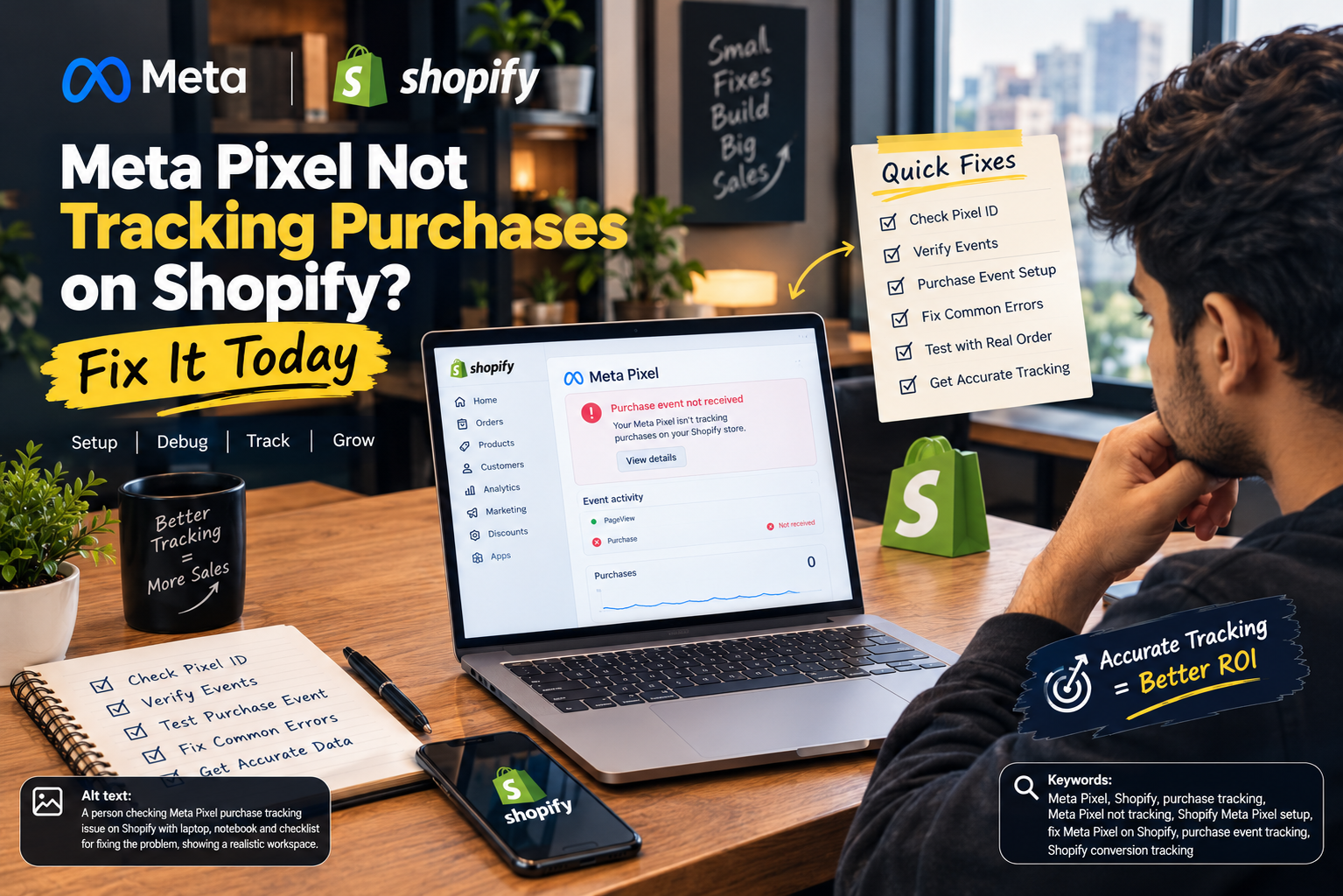
- Broken or incomplete tracking — if attribution is off, you’re optimising toward the wrong signals without realising it.
- No creative pipeline — ad fatigue sets in, performance dips, and nobody notices until ROAS has already dropped.
- Website friction — the ads bring the right traffic, but a slow or confusing site quietly leaks conversions. This is often a website developmentproblem disguised as an ads problem.
- Reactive budgeting — shifting spend emotionally week to week instead of following a testing and scaling framework.
How Predictability Actually Gets Built
1. Diversified channel mix
Relying on Meta alone is risky. Agencies that build predictable growth usually layer in Google Ads for high-intent search demand, TikTok Ads for newer audience discovery, and increasingly JioHotstar Ads for large-scale reach in India specifically. When one channel softens, the others cushion the blend instead of the whole business feeling it.
2. Clean, unified tracking
Predictable growth is impossible without accurate data. That means Conversions API, server-side tracking, and reconciling ad-platform numbers against actual store revenue — not just trusting whatever Meta or Google report on their own dashboards.
3. A structured creative testing cadence
Instead of launching one ad and waiting to see what happens, predictable accounts run a steady rhythm of new creative concepts every month — often using AI video creation to keep volume up without the cost of constant photoshoots. This keeps performance from decaying as older ads fatigue.
4. Forecasting based on historical data, not guesswork
Once an account has a few months of consistent data, a good agency can build a reasonably reliable forecast — if we spend X, we should expect Y in revenue, within a range. That range narrowing over time is a sign the account is actually maturing.
5. Full-funnel coverage, not just prospecting
Predictable revenue leans heavily on retargeting and retention, not just new customer acquisition. Combining paid ads with consistent social media marketing keeps the brand present between purchases, which steadies repeat revenue — often the most predictable part of the whole funnel.
The KPIs That Actually Matter
- CAC (Customer Acquisition Cost) — what it actually costs to acquire one paying customer, blended across channels.
- LTV (Lifetime Value) — what that customer is worth over time, not just their first order. CAC only makes sense next to LTV.
- MER (Marketing Efficiency Ratio) — total revenue divided by total ad spend across all channels, useful for seeing the bigger picture beyond platform-reported ROAS.
- Payback period — how long it takes to recover the cost of acquiring a customer, which matters a lot for cash flow.
- Blended ROAS — ROAS across all channels combined, since optimising one platform in isolation can hide losses elsewhere.
What a Performance Marketing Agency Actually Does Month to Month
It’s less dramatic than it sounds — mostly disciplined, repeatable process:
How The Brand Hawk Builds Predictable Growth
At The Brand Hawk, predictable revenue growth comes from treating performance marketing as a system, not a series of one-off campaigns. Every ecommerce account gets diversified channel coverage across Meta Ads, Google Ads, TikTok Ads, LinkedIn Ads, and JioHotstar Ads, backed by clean tracking and a steady AI video creation pipeline so creative fatigue doesn’t quietly erode ROAS. When the bottleneck turns out to be the site rather than the ads, our website development team fixes that too, instead of just pushing more traffic at a leaky funnel.
You can read more about our approach on the About Us page, or see the full service list at thebrandhawk.com.
Frequently Asked Questions
How long does it take for revenue growth to become predictable?
Most accounts need 60-90 days of consistent data before forecasting becomes reliable. Before that, spend is largely going toward testing and learning what actually works for the brand.
What’s the difference between a performance marketing agency and a regular digital marketing agency?
A performance marketing agency ties everything back to measurable outcomes — sales, CAC, ROAS — rather than softer goals like impressions or engagement. The focus is on numbers that connect directly to revenue.
Can a performance marketing agency guarantee revenue growth?
No agency should guarantee specific numbers, since too many external factors — competition, seasonality, platform changes — are outside anyone’s control. What a good agency can offer is a disciplined process and clear reporting that makes growth more consistent over time.
Do small ecommerce brands need a performance marketing agency, or just a bigger ad budget?
More budget without a clear system usually just means losing money faster. Even small brands benefit from proper tracking, structured testing, and full-funnel strategy before scaling spend aggressively.