If your Facebook and Instagram ads are burning through spend without bringing back sales, you’re not alone — and it’s rarely the platform’s fault. More often than not, a handful of avoidable mistakes are quietly eating into your budget every single day. The good news? Once you know what to look for, most of these are fixable within a week.
We work with brands every month who come to us after months of running ads on their own, frustrated that their cost per result keeps climbing while conversions stay flat. Almost every time, the same set of mistakes shows up. Here they are — and what to do instead.
1. Targeting Too Broad (or Too Narrow)
One of the most common traps advertisers fall into is getting the audience size wrong in either direction. Go too broad, and Meta’s algorithm spends your budget “finding” the right person instead of showing ads to people who are actually ready to buy. Go too narrow — layering five or six interests on top of each other — and you choke the algorithm’s ability to learn, driving your cost per result up fast.
What works instead: Start with a mid-sized, interest-relevant audience and let Meta’s machine learning do the heavy lifting. Broad targeting paired with strong creative and a well-built pixel almost always outperforms an over-engineered audience.
2. Ignoring the Learning Phase
Every time you make a major edit to an ad set — changing the budget, audience, or creative — Meta resets the learning phase. Brands that panic and tweak campaigns daily during this window end up paying a “learning tax”: higher costs and unstable results, simply because the algorithm never gets the 50 conversions it needs to stabilize.
What works instead: Make fewer, more deliberate changes. Let a campaign run for at least 3-4 days before judging performance, and batch your edits instead of making them one at a time.
3. Weak or Repetitive Creative
Even a perfectly targeted campaign will fail if the creative doesn’t stop the scroll. We regularly see accounts running the same three ad creatives for months, well past the point where the audience has gone blind to them — a problem known as ad fatigue. Frequency creeps up, cost per click rises, and conversions quietly dry up.
What works instead: Refresh creative every 2-3 weeks, and test multiple formats — short-form video, UGC-style content, static carousels — rather than betting everything on one style. Agencies that specialize in meta ads management services usually run 4-6 active creative variants at any given time specifically to avoid this.
4. No Real Full-Funnel Strategy
A shocking number of accounts run every single campaign as a straight cold-to-purchase push. That works for a small slice of impulse buyers, but it leaves a huge amount of warm and interested traffic — people who viewed a product, added to cart, or engaged with content — completely untouched.
What works instead: Build a simple three-stage structure: awareness campaigns to build audience pools, retargeting campaigns for warm traffic, and a dedicated campaign for cart abandoners. This alone often lowers blended customer acquisition cost significantly without increasing total spend.
5. Broken or Missing Pixel & Conversion Tracking
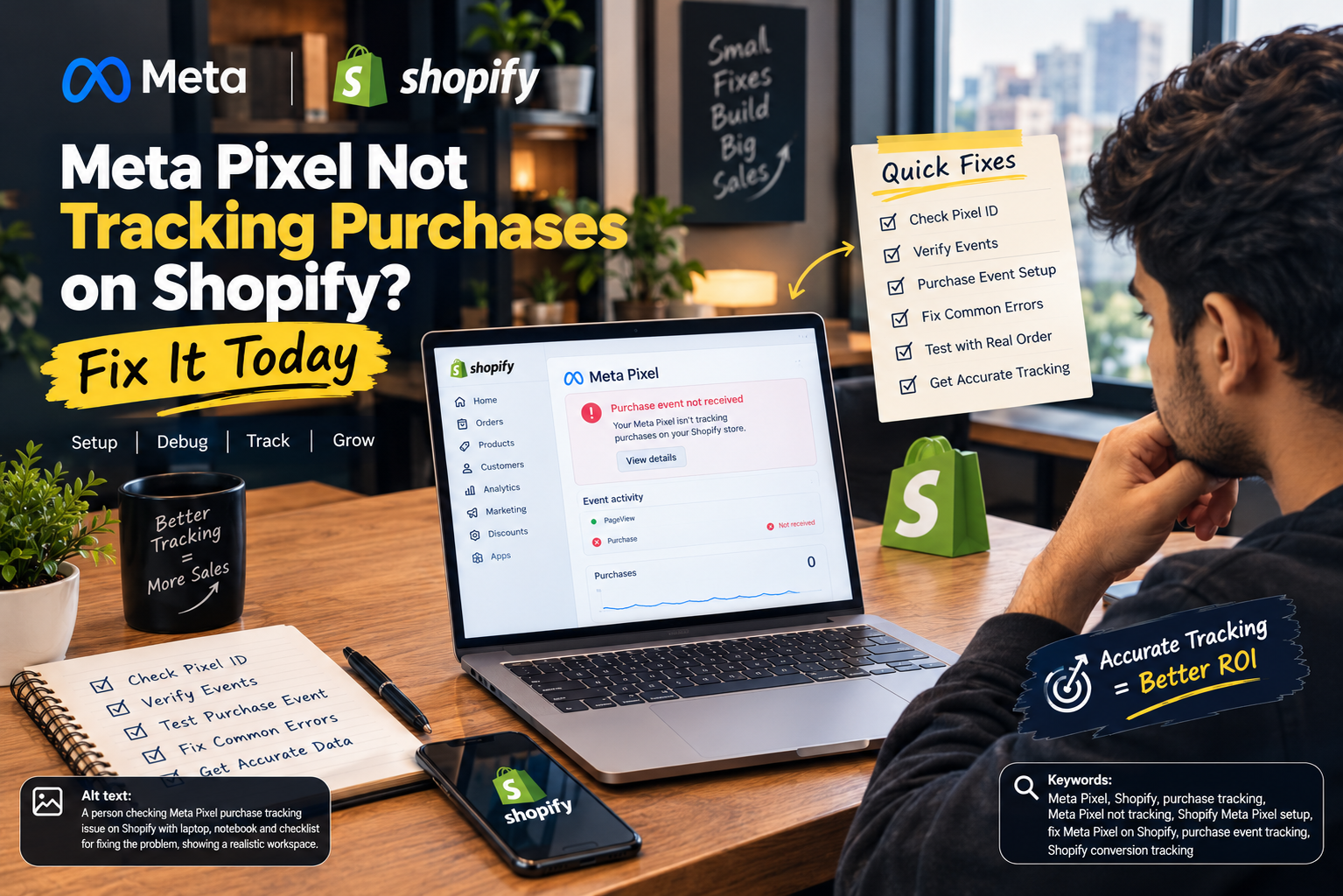
This is the mistake that quietly does the most damage, because it’s invisible until you look for it. Misconfigured pixels, missing Conversions API setup, or duplicate events mean Meta’s algorithm is optimizing based on incomplete or wrong data. You could be paying for “purchases” that never happened, or missing signals from real ones.
What works instead: Audit your pixel and Conversions API setup at least once a quarter using Meta’s Events Manager. This single fix often has a bigger impact on ROAS than any targeting or creative change.
6. Setting and Forgetting Budgets
Letting a campaign run unattended for weeks feels efficient, but Meta ads move fast — creative fatigue, seasonal shifts, and rising competition for auction inventory all change week to week. Brands that don’t review performance regularly end up scaling spend on campaigns that have already peaked, or under-funding the ones that are just starting to work.
What works instead: Review performance weekly at minimum, and shift budget toward what’s actually converting rather than what was planned at the start of the month.
7. Not Matching Ad Copy to Landing Page Intent
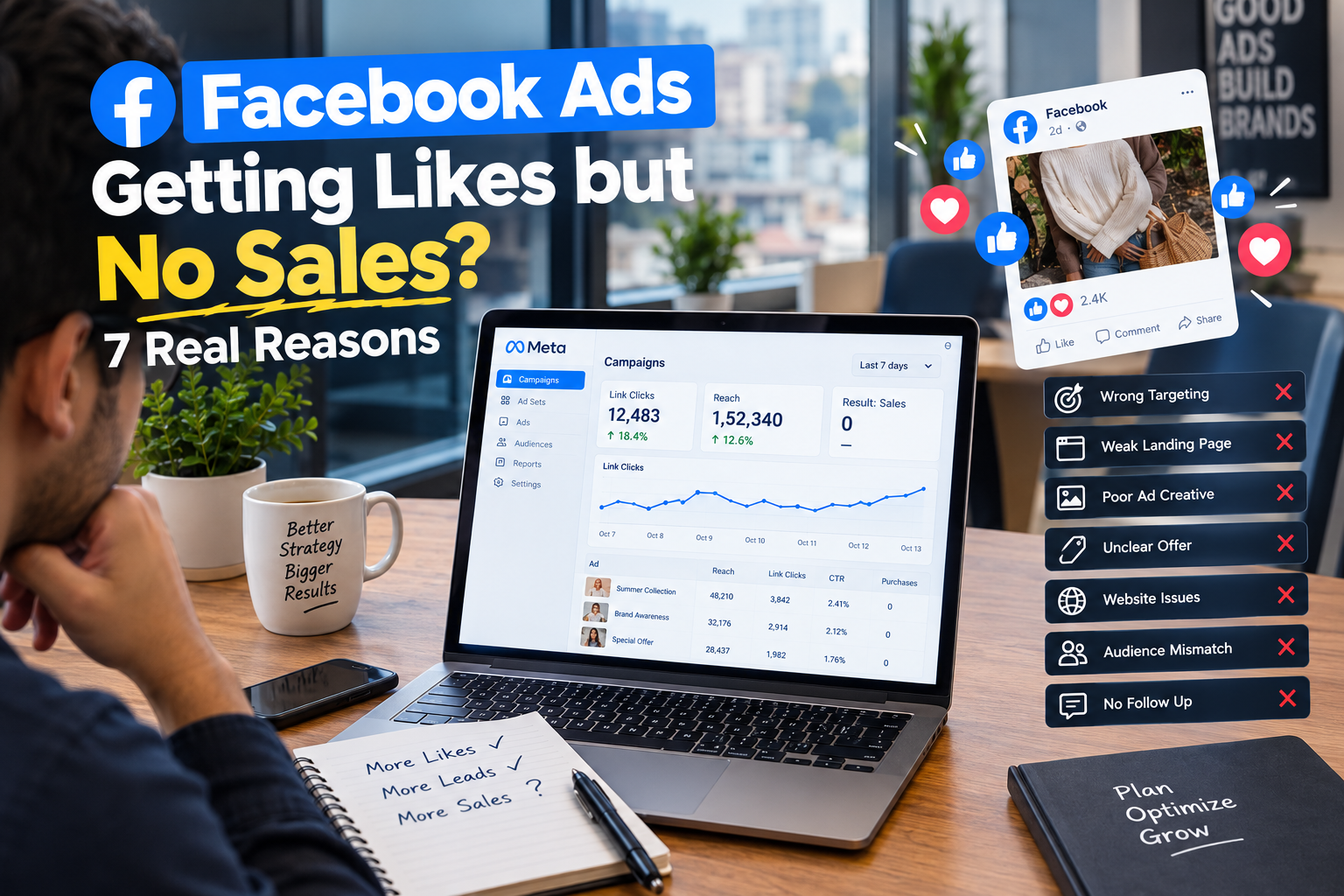
Traffic quality can be excellent and still convert poorly if the click doesn’t match the destination. Ads promising a discount that lead to a generic homepage, or product ads that land on an unrelated collection page, create friction at the exact moment a buyer was ready to convert — and that mismatch shows up directly in a lower ROAS.
What works instead: Every ad should point to a landing page that matches its exact promise — same offer, same product, same message. This is a simple fix that consistently improves conversion rates without spending an extra rupee or dollar on ads.
The Real Cost of These Mistakes
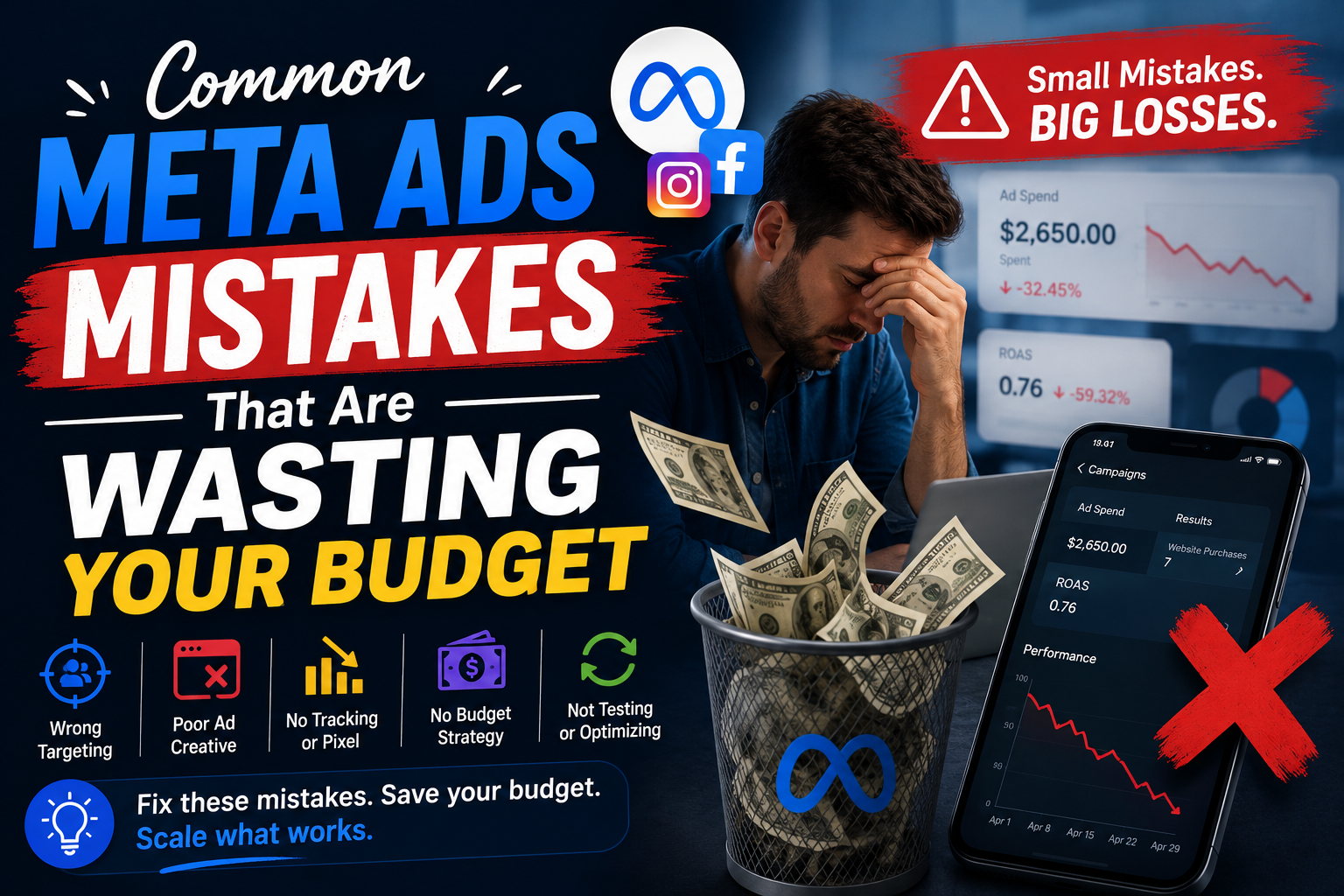
Individually, each of these might only cost a few percentage points of efficiency. Together, they compound — and most struggling ad accounts we review are usually making three or four of these mistakes at once, not just one. That’s why a full account audit, rather than a single quick fix, is usually what actually moves the needle.
Final Thoughts
Running Meta Ads well isn’t about spending more — it’s about spending correctly. Fixing targeting, protecting the learning phase, refreshing creative, building a proper funnel, cleaning up tracking, staying active on budgets, and matching copy to landing pages will solve the vast majority of budget-wasting issues we see across accounts of every size.
If your current campaigns are eating budget without delivering results, it may be time for a professional audit. As a dedicated meta ads agency, The Brand Hawk specializes in exactly this — helping brands turn underperforming Meta Ads accounts into a predictable, ROAS-positive growth channel.
Ready to stop wasting ad spend? Talk to our meta ads specialists and get a free audit of your current Meta Ads account.